
Home Industry Common Types of Metal Brackets and Their Industrial Applications

Common Types of Metal Brackets and Their Industrial Applications

by Joshua Stinson

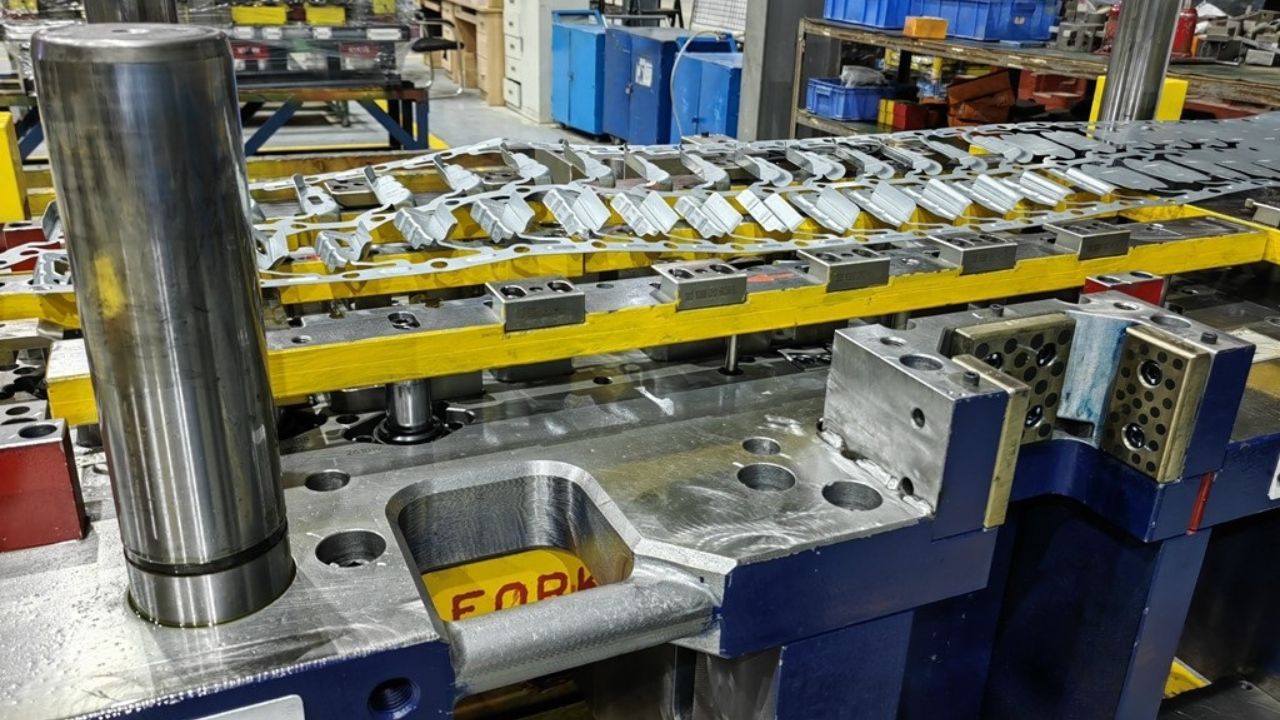
Metal brackets are key elements in industrial production that offer structural reinforcement, positioning, and a reliable means of mounting in many applications. The metal bracket fabrication ensures precise, durable support for components across diverse industrial applications. Metal brackets can keep components in place, stabilized and free of mechanical forces since lightweight electronic assemblies through to heavy industrial machinery are made using metal brackets. Knowing the most commonly used kinds of metal brackets and their application in the industry is important.

L-Brackets

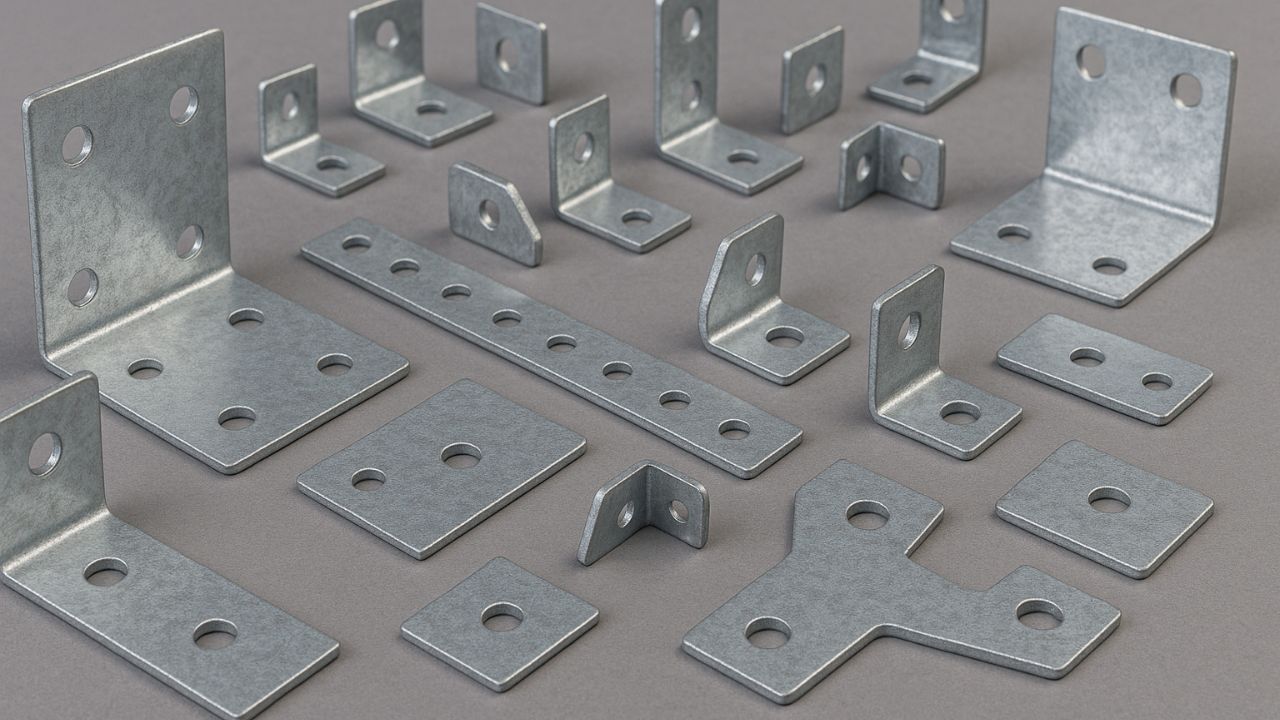
Metal brackets that are used as L-brackets are mostly used in industries. They have one 90-degree bend, making them useful to join perpendicular surfaces efficiently and effectively. L-brackets find large applications in machine housings, equipment frames, as well as electrical cabinets and sheet metal enclosures. Their simple geometry ensures that they are easy to manufacture and yet have a good load-bearing capacity. Where extra strength needs to be provided, L-brackets may either be made out of heavier material or reinforced with gussets to withstand extra weight and vibration, which may be provided via a custom fabrication service at ShincoFab.

Z-Brackets

Z-brackets have two parallel folds forming an offset type of profile, which enables parts to be mounted on other planes. This is what makes them especially handy in the process of implementing a situation where spacing, airflow, or alignment needs to be adjusted. Z-brackets are often employed in HVAC systems, control panels, signage systems and electrical systems within industrial applications. They are also used in construction, allowing engineers to either lay cables or clear the way, or provide ventilation voids, without having to reset the whole assembly and make them a convenient alternative to both new construction and retrofit.

U-Brackets

U-brackets are channels that have two vertical flanges that have been extended out of a base, creating a U-shaped profile. This construction offers good lateral support and assists in fixing components. U-brackets are frequently applied in the mounting of motors, batteries, pipes and cylindrical objects in industrial machinery and automotive systems. Their cradling nature lowers mobility and abrasion, particularly in areas prone to vibration or repetitive movement. U-brackets that are custom-made and have a high degree of precision are used to achieve fit and reliability over the long run.

Gusset Brackets

Gusset brackets are meant to be used in stressful environments where conventional brackets can be easily distorted. They have a triangular design that makes the joint between two surfaces stronger, and thus, rigidity and ability to support weight are significantly enhanced. Gusset brackets have extensive application in heavy machinery, conveyor systems, structural frames and motor mounts. Gusset brackets are essential in the case of industrial environments where there is constant vibration or dynamic loads that cause fatigue-related failures and structural integrity.

Hat Brackets

Hat brackets (occasionally called omega brackets) have an up-centered channel with flanges outward-facing. Several features of this profile include stiffness and elevation; hat brackets are strong in terms of supporting large sheet metal panels. They are widely applied to the industrial enclosures, equipment housing, and machinery panels to avert flexing and deformation. Also, hat brackets can be employed to lift pieces off a surface, enhance airflow, cooling, and cable management in electrical and electronic assemblies.

Flat Brackets

Flat brackets are metal plates that are unbent and have custom hole shapes that are utilized to attach components on the same plane. Although flat brackets are simple, they have vital purposes in the industrial setting. They are commonly applied in the reinforcement of joints, load distribution, and in the fast repair of machines and structural assemblies. Flat brackets are inexpensive and can be easily customized, and are also appropriate in situations where space is not much and simplified support needs to be applied.

Angle Brackets

Angel brackets are adaptable metal fittings having two arms attached at an angle, though not necessarily 90 degrees, and thus can accommodate non-standard joints. The brackets are typical in custom machinery, shelving systems and structural reinforcement in which normal L-brackets do not apply because of certain angular needs. Angle brackets are used to hold assemblies that need non-standard joining, which can be used in construction, in automation equipment, or in special industrial structures. They are so versatile that they serve as a key solution to engineers who have to fit odd shapes, non-perpendicular surfaces or compound assembly shapes.

Conclusion

All the metal types of brackets are used in the industry, with the lightest and the heaviest brackets being used to connect or support structures. The choice of bracket to be used is based on the load requirements, the environmental factors, the space available and the manufacturing factors. With the help of specialized fabrics developed by companies such as ShincoFab, the manufacturers can make sure that their metal brackets are accurately designed in terms of performance, durability, and easy assembly. The knowledge about these popular types of brackets will eventually result in more stable products, less downtime, and success in the functioning during long periods of time in the industrial world.

You may also like

Leave a Comment