Choosing the Right Roller Mill Belt in Agricultural Machinery
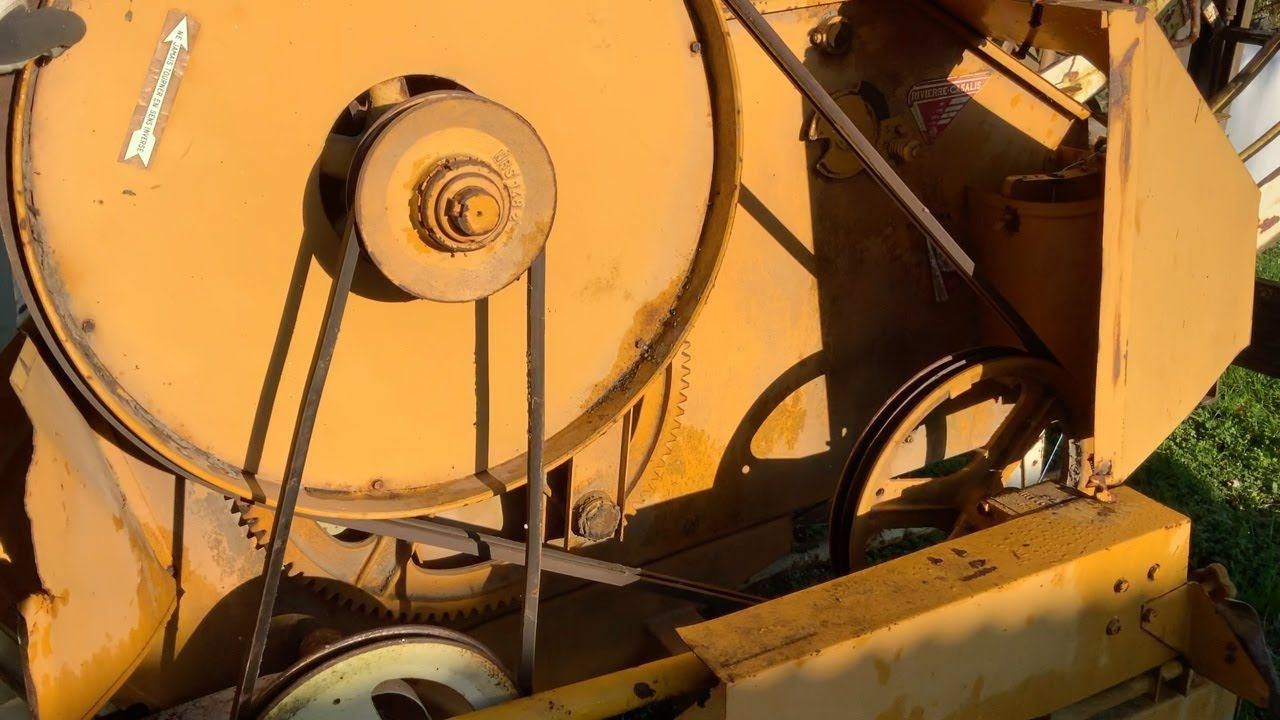
Individuals ought to know these belts are significant in the conveyance of power, grains, and seeds, among other loosely processed substances. Several factors should be considered when selecting the right Roller Mill Belt to use in agricultural machinery to ensure that the belt is selected based on its material, size, load capacity, and conditions under which it will operate, among other factors. This decision is not only the right one but also the one that makes the machines more productive, adding more life to them, reducing the amount of time spent in downtime, and raising the total productivity.
Knowledge About the Use of Roller Mill Belts
A roller mill belt is a belt that is used to pass along power from the motor to the rollers in milling equipment. It allows the rollers to rotate at the necessary speed and torque to compress, grind, or process material effectively. Roller mills find application in the agricultural sector, mostly in processing grain, seed, and animal feed, with uniform and accurate operation being a key requirement. People in business should know that it is vibration-free and smooth, and can be used to keep the grinding quality uniform. The roller mills are usually working long hours, and therefore, the belt should be capable of enduring the high tension, friction, and other environmental forces.
Roller Mill Belts: Use in Agriculture
The roller mill systems can have a variety of types of belts, based on the requirements of the machine being designed and the amount of power needed. The most popular ones are flat belts, V-belts, and synchronous timing belts. Flat belts are used when high speed is needed and running smoothly, whereas the V-belts are good in terms of grip and transmission of torque. Synchronous or timing belts offer an accurate movement and very little slippage, hence suitable in systems where the accuracy of movement is very important. All types are available in different materials such as rubber, polyurethane (PU), and reinforced fabric composites, each with its own advantages as far as flexibility, durability, and environmental resistance are concerned.
Factors to Be Considered
When selecting the right roller mill belt, it is necessary to consider a variety of performance factors. The initial one is material composition. Rubber belts are said to be flexible and shock absorbing, whereas polyurethane belts are better wear, oil, and water resistant. The tensile strength is another essential consideration since the belt should be able to withstand constant strain without any form of stretching or falling. The temperature gap is also a consideration, as agricultural conditions will subject machinery to extreme temperatures of either hot or cold. Also, the profile and size of the belt should be appropriate to the pulley system, as it should be able to fit and operate smoothly. These may be ignored, resulting in overuse, excessive wearing, or even mechanical breakdown.
Maintenance and Replacement Intervals
Even the roller mill belt of the top quality needs to be properly maintained to reach maximum service. Wear, cracking, or stretching of the product should be observed and done regularly. The manufacturer recommends proper belt tension and centerline to avoid uneven loading and minimize slippage. The washing of the belt and other parts around it assists in cleaning the debris and dust that might result in early wear. In case of replacement, it is advisable to use the belts of reputable manufacturers or the belts made specifically for the roller mill model being used. Poor performance and destruction of other machine parts might occur because of the use of incompatible belts.
Results of Selecting the Right Belt
It has a number of advantages for agricultural practices when the appropriate roller mill belt is selected. It enhances the efficiency of power transmission with good and constant milling effects. A correctly fitted belt will minimize vibrations and noise, which will improve the comfort of the operator and reduce mechanical pain on the machine. The right belt also helps in lowering the maintenance costs as it leads to fewer replacements, as well as a lower chance of a machine failure. Moreover, quality belts are more energy efficient and will assist in minimizing the operation costs in the long run. The benefits can result in significant long-term savings in large-scale agricultural facilities where productivity and reliability are the key factors.
Conclusion
At the end, the roller mill belt is a small part that might be overlooked, but it has a significant impact on the operation of the agricultural machinery. When choosing the right belt, one must understand the machine’s operational, environmental, and power transmission requirements. Considering material strength, wear resistance, temperature, and maintenance needs, operators can ensure optimal performance and machine life. In industries that rely on high performance in the agricultural industry, such as downtime directly influencing productivity and profitability, the right roller mill belt is not merely a performance issue, but a decision that would guarantee years of steady, reliable, and efficient operation.