Press Brake Specifications Explained: Which Parameters Actually Matter in Production?
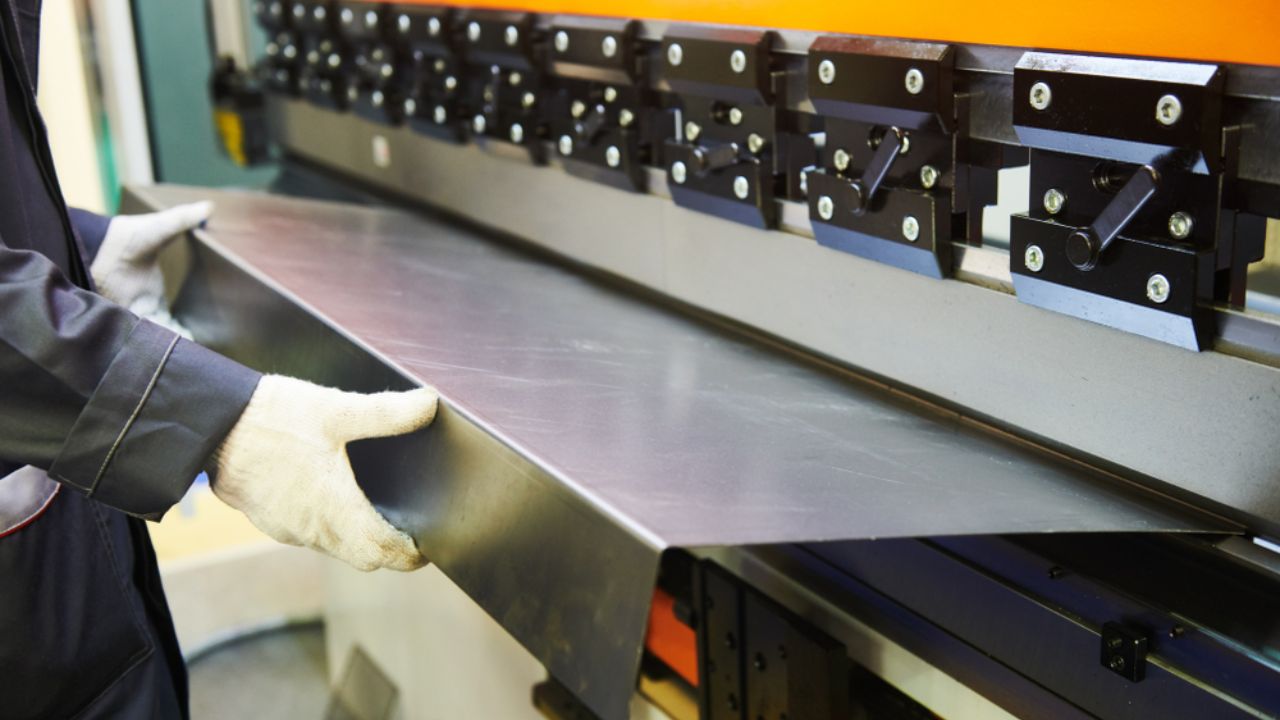
When comparing press brakes, many buyers typically focus on tonnage, maximum bending length, and price. However, the factors that truly determine whether a machine is suitable for actual production include daylight, ram stroke, throat depth, backgauge axis configuration, crowning method, controller functionality, and tooling compatibility.
This article will focus on analyzing which parameters of a press brake deserve the most attention, helping buyers align these specifications with their actual workpiece requirements.
Basic structural parameters buyers must understand
Tonnage
The tonnage of a press brake is not a value that can be considered in isolation; it is influenced by the material, sheet thickness, V-die opening, and bending process. Generally, the greater the material strength and sheet thickness, the higher the tonnage requirement; the smaller the V-die opening, the higher the tonnage requirement; air bending generally requires less tonnage compared to bottoming and coining.
Maximum bending length
This refers to the machine’s maximum bending length or effective working length. For long workpieces, the closer the part length is to the machine’s effective working length, the more likely angle inconsistency will occur between the center and the ends. Therefore, the machine’s maximum bending length affects the consistency of angles along the entire length, the support method, and process stability.
Daylight, ram stroke, and throat depth
These three parameters directly determine whether certain special structural parts can be loaded into the machine, whether they will collide during bending, and whether they can be unloaded. This is particularly important for deep U-shaped parts, box-type parts, flanged parts, and parts with high flanges.
Key parameters that truly affect bending accuracy
Backgauge axis configuration
The backgauge directly affects positioning accuracy, repeatability, and changeover efficiency. Actual configurations are typically based on axes such as X, R, Z1, and Z2; the number of axes is usually determined based on the complexity of the workpieces being processed.
Crowning or deflection compensation methods
When bending long workpieces, the ram and table undergo elastic deformation under high loads. A crowning system counteracts this deformation, ensuring that the angles at the center and both ends of the long workpiece remain consistent. Common crowning systems are primarily divided into mechanical and hydraulic types; in terms of control methods, they can be further categorized into manual adjustment and CNC automatic compensation, with implementation methods varying by brand and control system.
Tooling and clamping compatibility
Tooling interfaces and clamping systems affect tooling compatibility, tool change efficiency, and clamping consistency. Buyers should verify whether the interfaces or clamping methods used by the equipment facilitate future procurement and rapid tool changes.
How to match parameters to specific workpiece types
Thin-gauge stainless steel or surface-sensitive workpieces
These workpieces have extremely high requirements for precision and surface finish. When bending such workpieces, the equipment’s positioning accuracy, repeatability, crowning capability, angle control, and surface protection capability are put to the test.
Thick-plate structural components
These workpieces require high strength and durability. Bending them places greater demands on the machine’s tonnage capacity, frame rigidity, load-bearing capacity of the table and ram, tooling strength, and stability during long-term continuous production.
Long panels or cabinet-type workpieces
These workpieces are typically large in size, involve multiple bending operations, and require high assembly precision. Bending these workpieces places greater demands on the equipment’s daylight, ram stroke, and throat depth, as well as the ability of the control system, backgauge, and compensation system to support multiple complex bends.
How to determine whether a manufacturer’s published specifications are truly useful
A good specifications page does more than just list numbers; it clearly explains which specifications are suitable for which workpieces and which configurations correspond to which scenarios. The more detailed the explanations of these specifications, the more helpful they are to buyers in narrowing down their options.
When comparing press brake specifications and compatibility information, many buyers cross-reference multiple public sources, including the specification pages on different manufacturers’ official websites, such as raymaxtech.com. By comparing the tonnage ranges, control systems, application scope, and configuration descriptions published by multiple manufacturers, buyers can typically gain a more comprehensive understanding of the configuration differences between press brake models.
A concise and practical checklist for comparing two press brake specification sheets
Which parameters must be compared item by item
When you have two specification sheets, we recommend comparing them based on the following criteria:
Are the tonnages calculated based on similar materials, sheet thicknesses, V-die openings, and bending methods?
Do the daylight, ram stroke, and throat depth meet the requirements of your complex workpieces?
Is the configuration of the backgauge axes and the functions of each axis clearly specified?
Is it clearly stated whether the crowning is mechanical or hydraulic, and whether it is manually adjusted or CNC-controlled?
Are the controller’s functions and tooling standards clearly specified?
Can you determine from the specification sheets whether the machine is compatible with your actual workpieces?
What additional questions need to be clarified before submitting a formal inquiry?
Before submitting an inquiry, buyers should first assess their internal requirements and then ask the manufacturer the following questions:
Can you provide a process plan or make sample parts for the main materials I will be processing?
Can you meet my precision requirements?
Given my production model, can you recommend a suitable, more efficient configuration?
What is the delivery timeframe? Can you provide technical and training support?
If I plan to upgrade to more complex parts, have frequent changeovers, or meet higher surface finish requirements in the future, does this machine support future upgrades?
Conclusion
The specifications and parameters of a press brake only make sense when applied to real production scenarios. We must first understand the logic behind these parameters and conduct a thorough comparison to select the press brake that best meets our production needs.