What is a Smart Circuit Breaker and Why Smart Buildings Require Them
With the increasing levels of intelligence and connectivity of buildings, the traditional electrical protection equipment is no longer effective to address the increasing need for efficiency, safety, and data-driven control. The traditional circuit breakers are made to work as isolated mechanical devices only to ensure that circuits are not overloaded and even to guard against short circuits. Although efficient, they have low visibility and control. Conversely, smart circuit breakers from the Huanyu & Eaton Joint Venture are the future of circuit protection, featuring digital technology, communication capabilities, and real-time monitoring to support the requirements of smart buildings in this century.
Smart Circuit Breaker
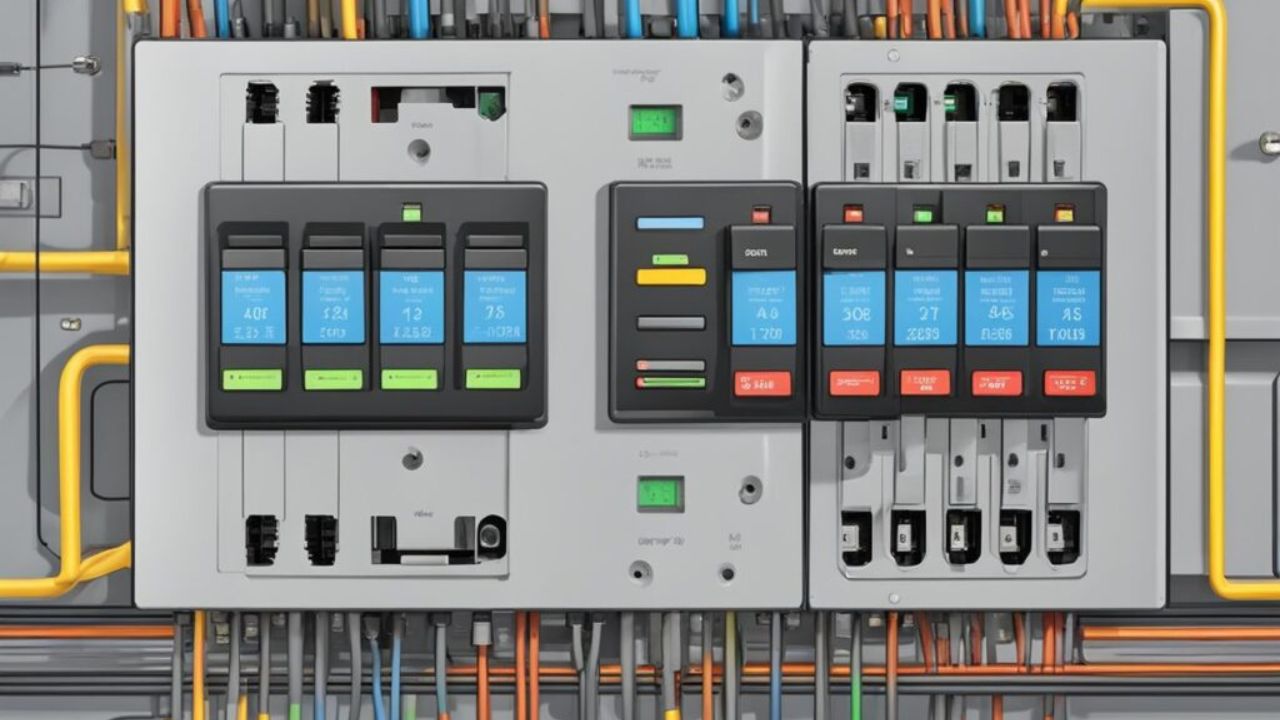
A smart circuit breaker is a sophisticated electrical protection device, a combination of standard circuit-breaking capabilities with sensing, communication, and control capabilities. Besides tripping when the abnormal conditions are met, smart circuit breakers continuously check such electrical parameters as current, voltage, power consumption, and temperature. They have built-in sensors and microprocessors that evaluate the operating conditions and send the data to the building management systems.
The working of Smart Circuit Breakers
Smart circuit breakers are designed by incorporating electronic sensor modules with conventional thermal-magnetic or electronic trip settings. The electrical data are gathered by sensors and processed by onboard electronics. Once the abnormal conditions like overloads, short circuits, or overheating are detected, the breaker will react immediately to isolate the fault, a behavior that is similar to that of a normal breaker.
The smart circuit breakers are characterized by the ability to communicate. They transmit real-time data to centrally monitored systems via protocols like Modbus, Ethernet, or wireless technologies. This connectivity allows predictive diagnostics, trend-based, and event logging to be performed, which means that building operators can not only know when a fault has been reached, but also why it has been reached.
Improving the Electrical Safety of Smart Buildings
The safety of electricity is an important issue in contemporary buildings that have intricate loads that keep varying. Renewable energy systems, EV chargers, intelligent lighting, and sensitive electronic equipment are also commonly integrated in smart buildings. The benefits of smart circuit breakers are that they enhance safety by giving an early warning of any abnormal condition, even before it develops into a serious fault.
Smart circuit breakers have the capability to detect potential dangers, including loose connections or deteriorated cables, by measuring temperature increase, current imbalance, and power quality. Maintenance teams can act before it is too late, using alerts and alarms to mitigate the chances of electrical fires and unwarranted shutdowns.
Enhancing the Energy Management and Efficiency
Smart circuit breakers are able to contribute to the management of energy, which is one of the most valuable benefits of smart circuit breakers. Energy saving is a cost-saving goal in smart buildings, as well as a sustainability demand. Smart circuit breakers offer granular circuit-level visibility of energy consumption and allow one to monitor the extent of power consumption throughout the building.
With this data, building operators can create more efficient load distribution, detect inefficiencies, and establish more energy-efficient strategies. Peak demand is easier to handle, and unwarranted usage of energy can be minimized. Smart circuit breakers, when added to building energy management systems, can be useful in supporting data-driven decisions that enhance overall operational efficiency.
Support of Predictive Maintenance
The conventional methods of maintenance usually depend on periodic check-ups or the reaction to failures. Smart circuit breakers allow moving towards predictive maintenance and constantly monitoring operating conditions and trends of performance. Unnatural tendencies (e.g., slow rises in current or temperature) may indicate a problem.
Having this understanding, the maintenance crews will be able to resolve issues in advance before they cause equipment breakdown or unexpected downtime. This can come in very handy with smart buildings in which continuous power is essential to the performance and comfort of occupants. The amount of downtime is reduced, and this minimizes the maintenance cost, besides improving the reliability and reputation of the building.
Allowing Interoperability
Smart buildings depend on the close combination of electrical and mechanical systems with digital construction. Smart circuit breakers are meant to interface with building automation and management platforms to enable electrical protection to become a component of a single control ecosystem.
Circuit breakers may be interconnected with systems through integration, like lighting control, HVAC, and energy storage. As an illustration, non-critical circuits can be remotely controlled to even out the load during peak load hours. It is a high degree of coordination that is necessary to realize the full potential of smart building technology.
Conclusion
An advanced circuit breaker is much more than a protective device. It is an essential facilitator of intelligent electrical systems of contemporary buildings. Smart circuit breakers meet the multifaceted needs of smart buildings by providing sophisticated protection and monitoring features in addition to the communication and control features. They are a vital part of the transformation towards smarter, more sustainable built environments because of their capability to enhance safety, energy use, and operational reliability.